Enhanced Corrosion Resistance
The anodic pretreatment layer creates an additional protective barrier, reducing the risk of corrosion developing beneath the powder coating.

Advanced corrosion protection for demanding environments.
Pre-anodizing is an advanced aluminium surface pretreatment that combines the protective properties of anodizing with the design flexibility of powder coating. It is developed to significantly improve resistance to corrosion, particularly in coastal, humid and highly polluted environments.
Pre-anodizing is an electrochemical pretreatment process applied to aluminium profiles before electrostatic powder coating. It creates a thin, controlled aluminium oxide layer integrated into the surface of the metal.
Unlike conventional decorative anodizing, the pre-anodized oxide layer is not sealed as a final surface finish. Instead, it forms a protective foundation that is subsequently covered by powder coating.
This combination provides improved resistance to under-film corrosion while retaining a wide variety of architectural colours, textures and surface appearances.
A durable aluminium finish begins long before the final colour is applied. Advanced pretreatment helps protect architectural profiles against demanding environmental conditions, supporting long-term performance and appearance.
Harsh environmental conditions can affect the protective performance of conventional coated aluminium.
Filiform corrosion is a form of under-film corrosion that can develop beneath an organic coating when moisture, salts and other aggressive agents reach vulnerable areas of the aluminium surface.
It can become visible as fine, thread-like patterns or blistering beneath the coating, often developing near edges, joints or damaged areas. Effective pretreatment plays an important role in reducing the risk of this phenomenon.
The anodic pretreatment layer creates an additional protective barrier, reducing the risk of corrosion developing beneath the powder coating.
Particularly valuable for aluminium applications exposed to salt-laden air, high humidity and aggressive coastal conditions.
Compatible powder coating provides an extensive selection of colours, textures and gloss levels to meet architectural design requirements.
A properly controlled pretreatment and coating process supports the long-term integrity of the finished aluminium surface.
Suitable for selected aluminium windows, doors, sliding systems and facade applications where enhanced protection is required.
Enhanced corrosion resistance can contribute to improved appearance retention and reduced risk of premature coating deterioration.
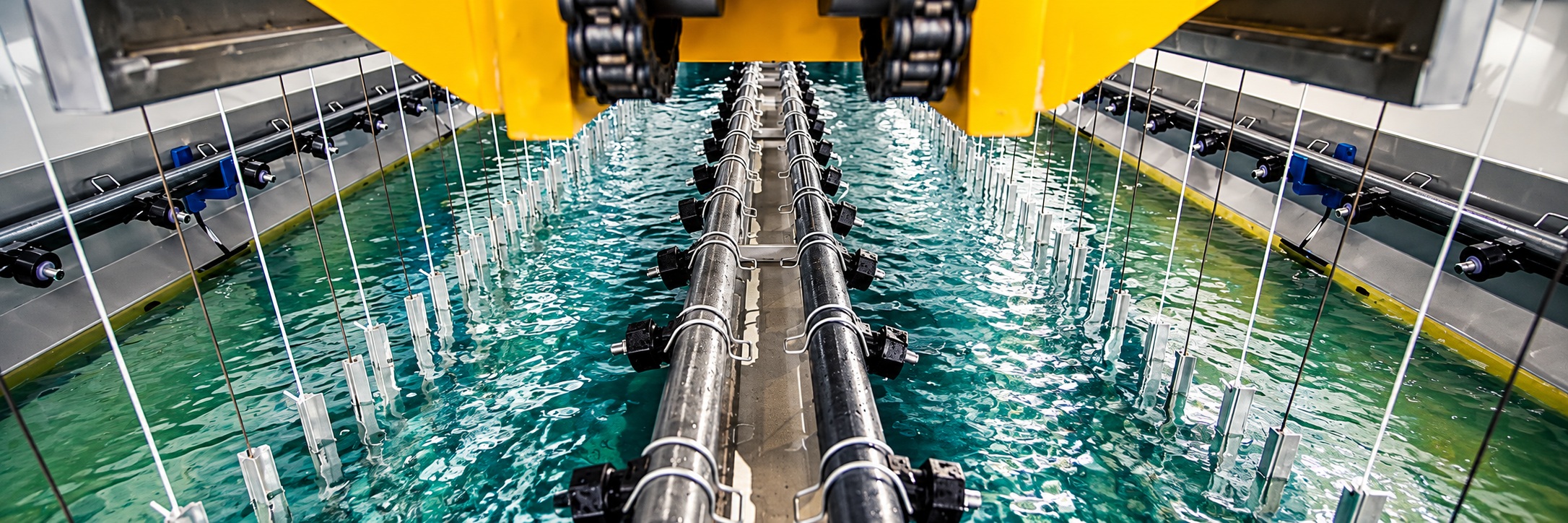
Pre-anodizing combines two established surface treatment technologies into a controlled finishing process.
The anodic pretreatment provides an integrated protective oxide layer, while the subsequent powder coating creates the visible colour and texture of the architectural profile.
The treatment relies on careful process control, accurate timing and appropriate handling between pretreatment and coating.
Aluminium profiles are cleaned and prepared to remove contaminants and ensure suitable conditions for the electrochemical treatment.
A controlled electrochemical process produces a thin aluminium oxide layer, typically several micrometres thick, integrated into the metal surface.
The pretreated profiles are handled under controlled conditions and powder-coated within the required processing interval.
Pre-anodizing adds a protective anodic foundation beneath the powder-coated finish.
Diagram is illustrative and not drawn to scale.
Pre-anodizing is especially relevant when environmental exposure increases the risk of corrosion beneath conventional powder coatings.
Residential and commercial buildings exposed to marine air and airborne salts, including seaside developments and waterfront architecture.
Aluminium constructions installed near swimming pools, spa facilities and areas with elevated humidity or exposure to chlorinated water.
Projects exposed to atmospheric pollution, aggressive contaminants or other challenging environmental conditions.
Buildings located near roads where de-icing salts are regularly used, creating additional exposure to corrosive agents.
The effectiveness of pre-anodizing depends not only on the formation of the oxide layer but also on the handling of profiles before powder coating.
Because the pre-anodized layer remains unsealed before painting, delays, contamination, humidity and improper handling can negatively affect the final result.
A well-controlled production process is therefore essential for achieving the intended corrosion resistance.
Accurate electrochemical process parameters are necessary to create the intended protective layer.
Powder coating should follow pre-anodizing within the processing interval specified by the relevant quality system.
Contact with contaminants, dust and moisture should be minimised before coating.
Powder type, curing conditions and surface preparation must follow approved specifications.
Technical note: The exact oxide layer thickness, processing interval, corrosion classification and certification depend on the selected surface treatment provider and specification. Pre-anodizing reduces corrosion risk but does not eliminate the need for maintenance.
Key considerations when specifying advanced corrosion protection for architectural aluminium systems.
Pre-anodizing is an electrochemical pretreatment that creates a protective aluminium oxide layer before powder coating, improving resistance to corrosion beneath the finished surface.
Yes. It is especially useful in coastal environments, where salt and moisture can increase the risk of filiform corrosion. Suitable coating specifications and proper maintenance remain important.
Conventional anodizing can be used as a final decorative and protective surface treatment. Pre-anodizing creates an unsealed anodic layer intended to receive a subsequent powder-coated finish.
Yes. Since powder coating is applied after pre-anodizing, a wide range of compatible colours, textures and gloss levels can be specified.
No surface treatment guarantees complete immunity from corrosion in every environment. Pre-anodizing improves corrosion resistance when correctly performed, but suitable fabrication, installation, detailing and maintenance remain necessary.
Availability depends on the system, profile supplier, selected finish and surface treatment capabilities. Each project's technical requirements should be reviewed before specifying the treatment.
Planning a project in a coastal or demanding environment? Contact our team to discuss suitable aluminium systems, surface finishes and enhanced corrosion protection options for your application.